Cap Meaning in Slang [2026] – Definition & Usage
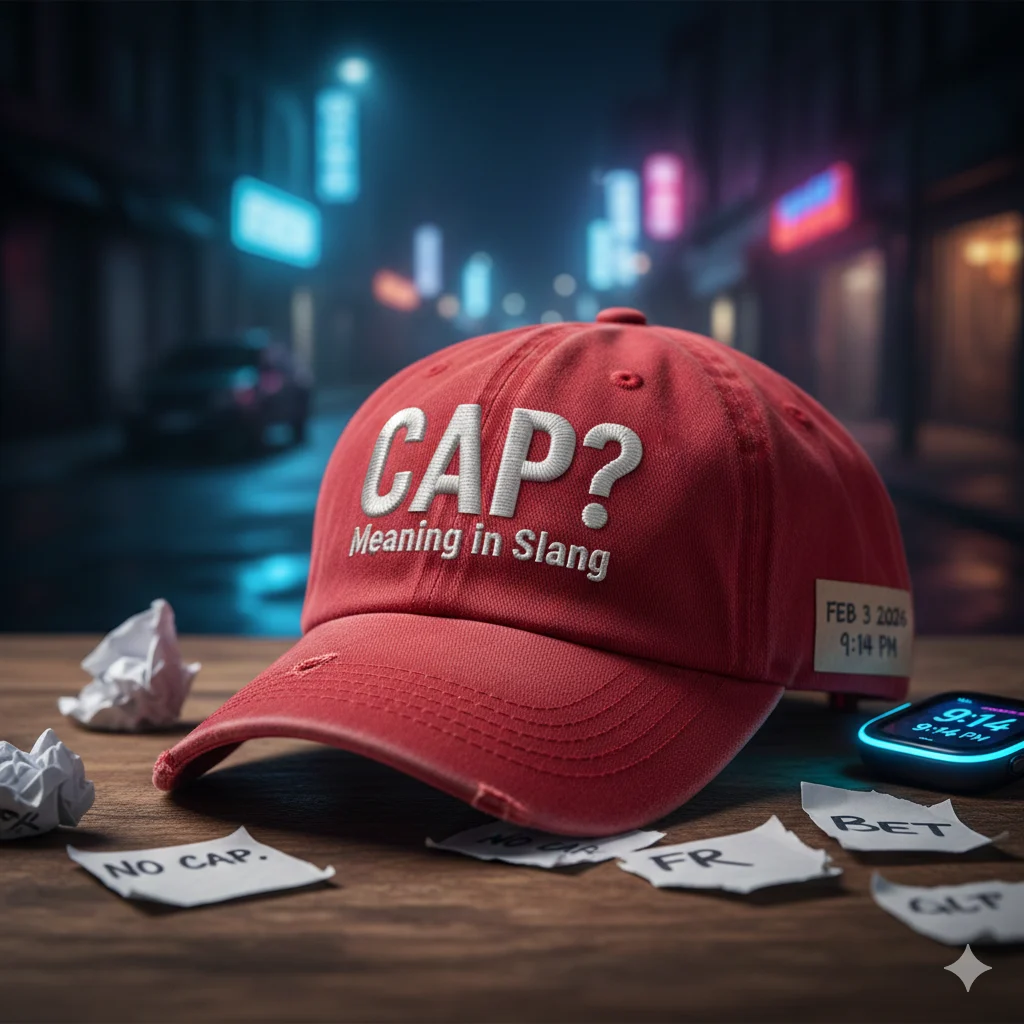
If you’ve been scrolling TikTok, Twitter, or chatting with friends, you’ve probably heard someone say, “No cap” or just “cap.” At first, it might sound like they’re talking about a hat… but in 2026 slang, it’s way more interesting.
“Cap” isn’t about fashion—it’s about honesty, exaggeration, and calling someone out. Think of it as the ultimate truth-meter in online conversations.
What Does “Cap” Mean in Slang?
Definition:
In slang, “cap” means a lie, exaggeration, or something that isn’t true. Saying “no cap” means “no lie” or “I’m being serious.”
Emotional/Personality Meaning:
Using “cap” shows someone’s awareness of honesty. Calling something “cap” can be playful, teasing, or even a little shady, depending on the vibe.
Where People Use It:
- TikTok comment sections
- Instagram and Snapchat captions
- Twitter threads
- Discord, WhatsApp, and texting
- Dating apps (to signal honesty or call out fibs)
The Evolution of “Cap” in Slang
How it became popular:
“Cap” has roots in early 2010s hip-hop and rap culture, where artists would say “no cap” in songs to emphasize truth. By 2023–2025, it exploded on social media as teens and Gen Z turned it into a viral, versatile expression.
Why people relate to it:
Everyone’s online life involves a little flexing, exaggeration, or humble-bragging. “Cap” gives users a playful tool to call out dishonesty or confirm authenticity.
Polite, Casual & Romantic Uses
Professional examples:
- “That new update improved performance? No cap, it really does.”
- “Our team finished the project ahead of schedule—no cap.”
Friend chat examples:
- “You met Drake at the concert? That’s cap lol.”
- “I can eat 10 pizzas in one sitting. No cap.”
Relationship examples:
- “You really think I’m the best cook? No cap?”
- “I miss you every day, no cap ❤️”
Tone & Nuances
- Playful: “You actually ran 5 miles today? Cap.”
- Supportive: “You got this job, no cap!”
- Teasing: “You said you’d beat me at Mario Kart? Cap 😏”
- Romantic: “You’re my favorite person, no cap.”
- Sarcastic: “Oh sure, you studied for 10 hours… cap.”
Why It Became Popular in 2026
Cultural reasons:
- Digital life thrives on authenticity. People crave quick ways to spot truth vs. flex.
- Influencer culture and viral trends reinforced “cap” as shorthand for honesty.
Social media trends:
- TikTok challenges and memes featuring “cap” helped it spread across age groups.
- Short-form video and GIF culture accelerated adoption, making it a staple in captions and comments.
Alternatives & Similar Slang
- Sus – suspicious or shady
- Facts – agreement or confirmation of truth
- Fr – short for “for real,” similar to “no cap”
- Low-key / High-key – subtle or obvious truth emphasis
- Deadass – very serious / not joking
Conclusion
In 2026, “cap” and “no cap” aren’t just slang—they’re a cultural shortcut for honesty, playfulness, and social commentary online.
From TikTok videos to casual texts and dating apps, this term helps people signal authenticity and call out exaggeration instantly.
Whether you’re joking with friends, sending a flirty message, or confirming facts professionally, knowing when and how to use “cap” keeps your online conversations current, fun, and relatable.